MOSAIC

Media Organizer for Streams, Articles, Intelligence & Content

The feed you didn't choose, replaced by the one you did.

Your feeds, your YouTube playlists, your subreddits and anything you share — one stream, on your own computer. The AI runs on your hardware and shows you which of your articles it read.

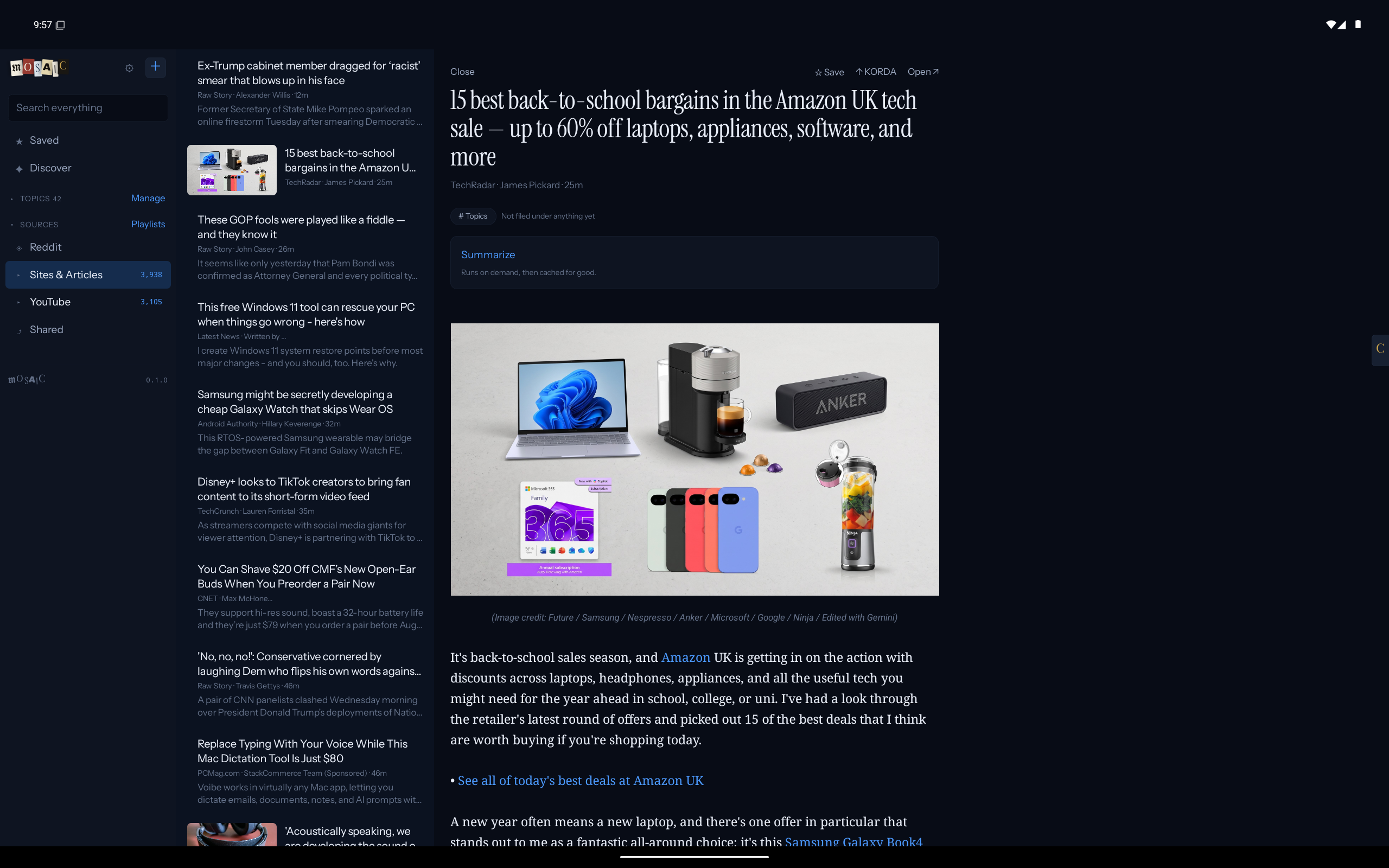
MOSAIC's three-panel reader: sources on the left, the item list in the middle, and an extracted article on the right
A real library, not a mockup. Navigator, item list, article — collapsing to two panels, then one, as the window narrows.

The part you'll notice first

Five sources carried it. You read it once.

Every reader you've used shows you the same story five times and calls it a feed. MOSAIC recognises it as one story, keeps the best copy, and tells you how many of your sources ran it — which is itself the most useful thing on the page.

Ars Technica06:12
The Verge06:40
Hacker News07:05
r/technology07:31
XDA08:02

The story itself, once.

5 sources first carried 06:12 · kept 14 days

Three reasons, depending on who you are

One stream. One librarian. One machine.

If you just want to read

A river, not a hoard.

Bookmark tools are archives: things go in and stay, and the pile is the point. MOSAIC ages things out on purpose. What you never opened expires, the count on a source means live now rather than accumulated forever, and read state follows you between the phone and the desk.

If you run local models

CIPHER cites its shelf.

Ask your own library a question. The answer is built only from the passages it retrieved, every one cited and openable, so you can check it instead of trusting it. It runs against your Ollama by default — no key, no account, no per-question bill.

If you self-host

Ten services, one command.

Postgres, the poller, the AI service and the reader come up with docker compose up, verified from a clean volume through to a rendered article. Nothing leaves the machine but the fetches themselves.

And on the phone

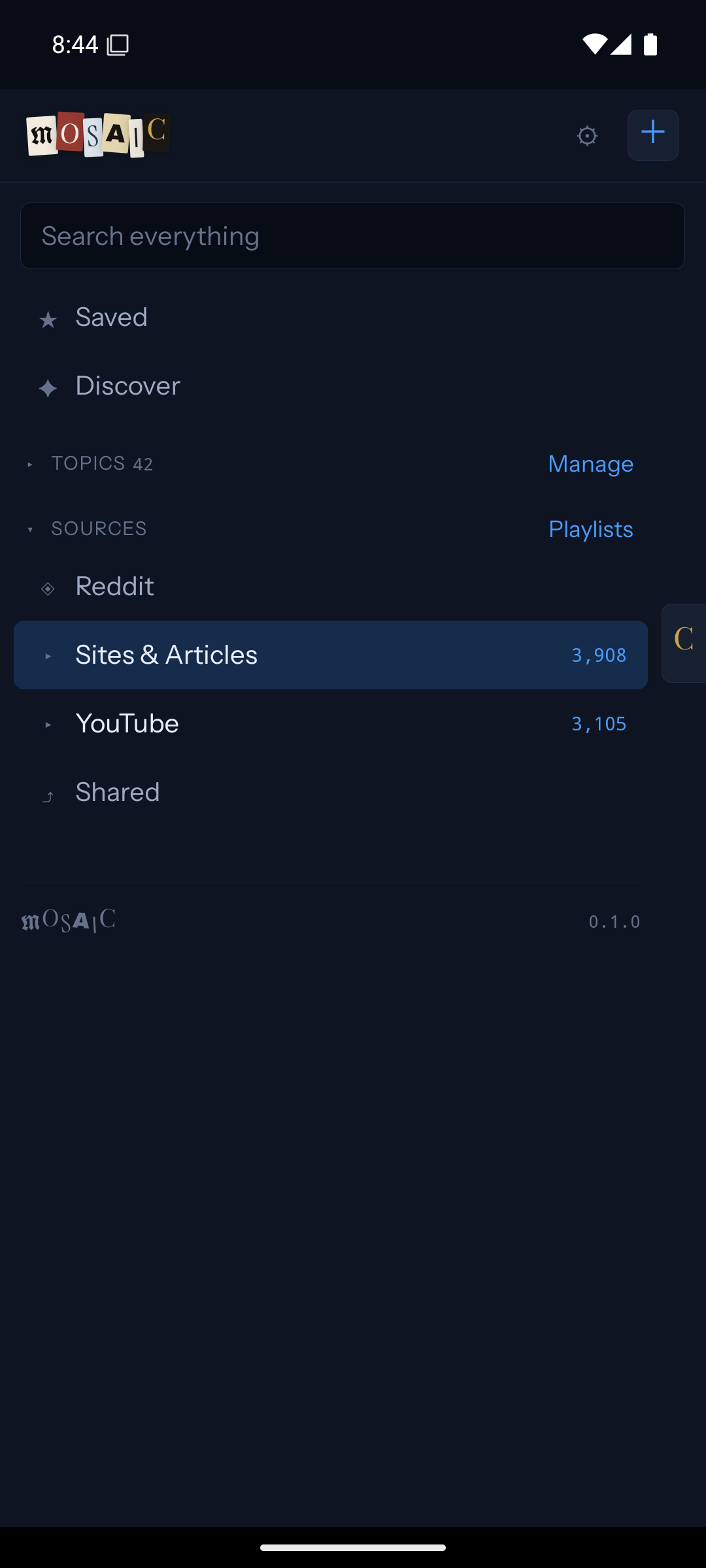
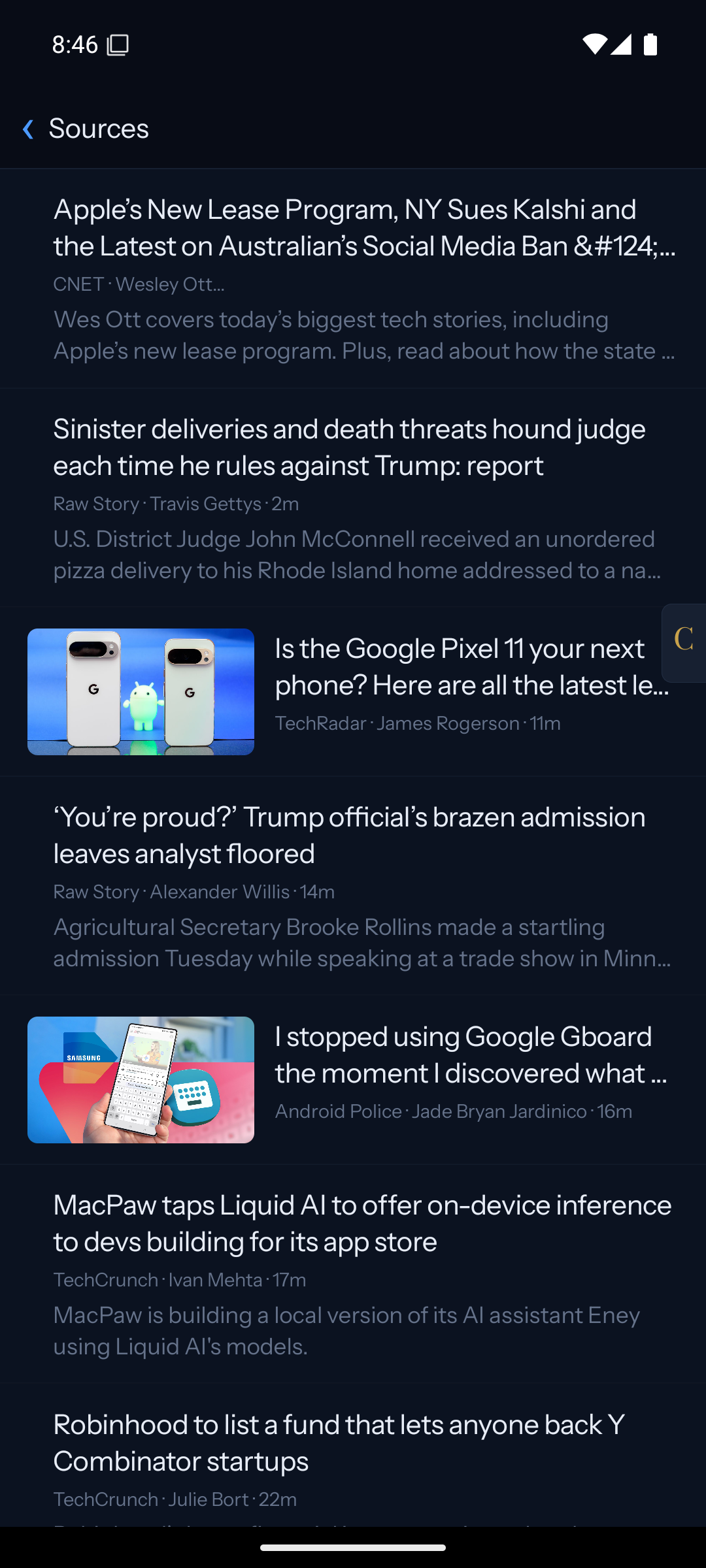
The same components, at a phone's width.

Not a companion app with a fraction of the features. One codebase, running as a web app and as native iOS and Android builds, with a share sheet that drops anything you're reading into the stream.

The MOSAIC navigator on a phone, showing sources with unread counts The MOSAIC item list on a phone, newest first

Against what

The difference is architecture, not a slogan.

Instead ofWhat changes
Feedly, Inoreader, Readwise Reader Their AI runs in someone else's cloud, on your reading. CIPHER runs on your machine and cites the exact articles it used.
Recall, Apple News, Discover They choose the sources. You choose them here — and a story five of yours carried shows up once, with a count, instead of five times.
Any of them, monthly No subscription merely to keep an AI running, because the model runs on hardware you already paid for.

Where this actually is

Built for one reader. Opening to ten.

MOSAIC has been running every day on one person's machine for months — 16,857 items in the library, RSS and YouTube and Reddit and Telegram and Pinterest and shares, deduplicated into groups, searched and summarised locally.

What it isn't yet: installable by someone who isn't its author. Today it's a Docker stack and a handful of background agents. The next piece of work is one installer per platform, and the ten people on this list are the ones who'll watch me get it wrong.

If that sounds like your kind of thing, put your address in. If you'd rather wait for a polished button, wait — this will be worth more to you in a few months.